Originally published on the UN Decade on Ecosystem Restoration
Sunday 1st March marked the fourth official ‘World Seagrass Day’, a day designated by the United Nations in May 2022 (A/RES/76/265) to raise awareness and promote actions for the conservation of seagrass across the world. Seagrass produces high levels of oxygen, filters water pollutants, and is estimated to account for up to 18% of carbon buried in coastal marine sediments, making its preservation crucial for climate change mitigation. Additionally, seagrass protects coastlines from erosion, provides habitats for thousands of marine species, and thus supports global food security. However, global seagrass is in danger.
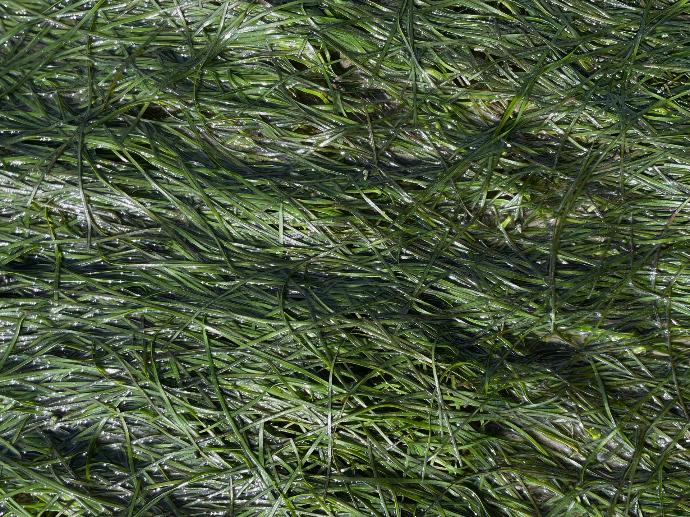
Despite its important contribution to sustainable development and climate change mitigation and adaptation, this core component of marine biodiversity is at risk, with seagrasses declining globally since the 1930s and approximately 30% of global seagrass area lost over the past century - at times disappearing at rates comparable to losing a football field every half hour.
Enter REBORN, a project that is seeking to reverse this trend in North-West Europe. Funded by Interreg North-West Europe (NWE),
11 partners will work together throughout the next 3.5 years to unlock
seagrass restoration at scale by simultaneously driving seagrass-related
governance, practice and capacity-building. The ambition is not only to
restore hectares of seagrass across the region, but to develop and test
a replicable and scalable restoration approach on 15ha across 5 pilot
sites that can serve as a reference model throughout Europe and beyond.
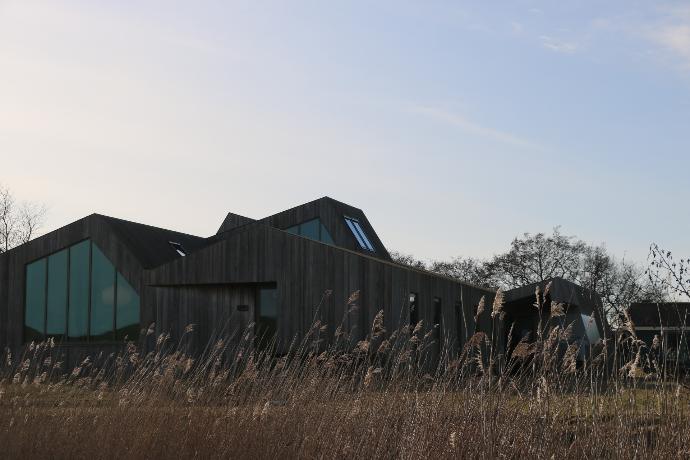
REBORN was officially ‘launched’ on Monday 16th February 2026 from the field station ‘De Herdershut’ (the shepherd’s hut) of the University of Groningen (the projects lead partner) on the Wadden Sea Island of Schiermonnikoog. De Herdershut is the Netherlands' northernmost scientific research station and the island of Schiermonnikoog felt like a particularly poignant setting for the launch of REBORN – the island was previously home to several seagrass meadows (it isn’t anymore) and in the region more broadly there existed vast seagrass ecosystems (also now gone). Indeed, until relatively recently seagrass meadows of around 150 square kilometers(!) covered the bottom of the Dutch Wadden Sea, and yet today those meadows have all but disappeared.
Despite the
chastening historical context, our three days together were filled with
optimism and determination, and a whole suite of tasks and meetings in
order to ensure that our individual, team, and organizational objectives
will start to move in the same direction, and that we start now to
connect our daily tasks to higher-level missions.
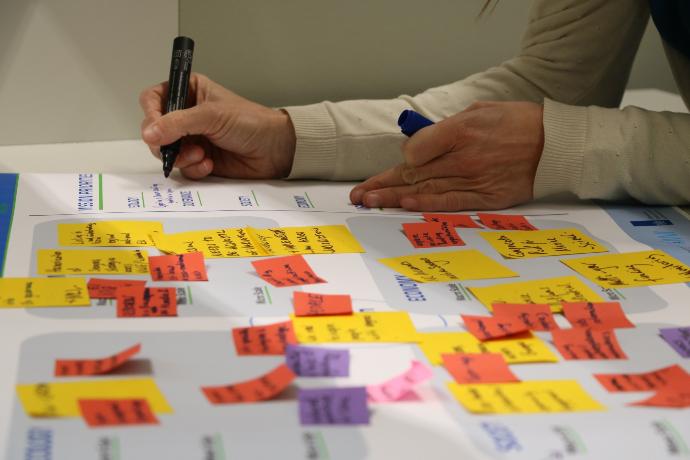
Since the industrial revolution, the North-West Europe (NWE) area has
been at the vanguard of industrialisation and economic development in
Europe and so to address these challenges, the Interreg North-West Europe (NWE)
programme supports territories in leading a sustainable and balanced
development and in reducing disparities. Using its transnational
cooperation expertise, the programme wants to jointly promote a green,
smart and just transition for all NWE territories with the aim to
support a balanced development and make all regions more resilient.
In
practice this means all Interreg NWE programmes focus on three key
areas: Terriroriality, Cooperation and Impact (programmes ultimately
promote cooperation between regions and countries to help their economic
and social development whilst tackling the ‘obstacle’ of borders.) As a
consortium we deliberately chose Interreg NWE as the best programme for
delivering on our seagrass restoration ambitions. Why? Because Interreg
NWE is a programme designed to faciliate cooperation based on genuine
shared challenges with other partners, and also because of the diversity
of project partners we could involve.
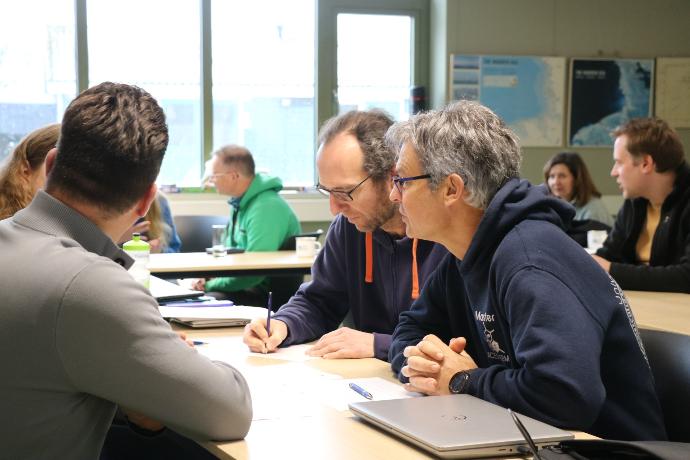
Under what normal circumstances when does the French Office for Biodiversity (OFB) get to engage with the Lower Saxon Department for Water, Coastal and Nature Conservation (NLWKN) on seagrass? Or under what other circumstances could a Dutch social enterprise site down (SRS) with the experts from the University of Galway
REBORN is providing a platform for the NWE seagrass restoration community to collaborate and engage in knowledge exchange and it is already accelerating our progress towards a genuine European Seagrass Restoration Alliance.
In our corner of North-West Europe, we are aiming to fulfil the promise of the UN Decade On Ecosystem Restoration, but we know it will only succeed if everyone plays a part.
If you want to engage with the REBORN project, then please do get in touch at r.j.lilley@rug.nl.
Overview:
REBORN is a EU-funded Interreg North-West Europe project. 11 Partners and 7 Associated Partners are collaborating to scale up seagrass restoration in NWE, boosting biodiversity and natural capital. REBORN unlocks seagrass restoration at scale (>1 ha) in NWE for biodiversity and natural capital gains by simultaneously driving seagrass-related governance, practice and capacity-building to:
- Drive long-term seagrass restoration governance and policy change in NWE through a multi-actor community of >30 organisations;
- Test a novel restoration model in ~15 ha in collaboration with 250 community members and facilitate its uptake to up to 50,000 ha across NWE;
- Increase the capacity of 40 organisations (practitioners, community members, businesses, policy makers) as seagrass restoration ambassadors through tailored capacity building modules.